
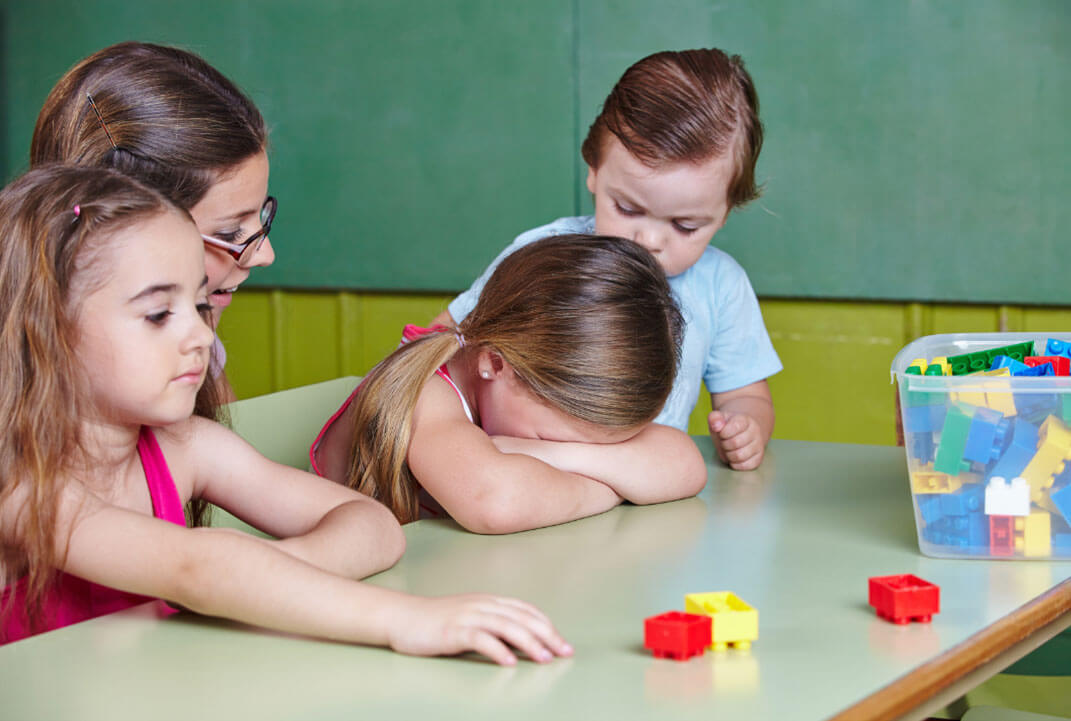
If your preschooler seems to go from happy to frustrated in seconds, you are not alone. Big emotions are a normal part of early childhood, and children are still learning how to understand, express, and manage their feelings. Supporting emotional development in preschoolers takes patience and practice, but the skills children build during these years can help them navigate relationships and challenges as they grow.
Why does my preschooler have big emotions?
Preschoolers experience strong emotions but do not yet have the same ability to regulate them as older children and adults. A child may become overwhelmed by disappointment, frustration, hunger, tiredness, or a change in routine. They may know they are upset without having the words to explain why.
This is why tantrums and emotional outbursts can happen. Rather than viewing these moments as simply “bad behavior,” parents can see them as opportunities to help children learn what they are feeling and how to respond.
How can I help my child regulate emotions?
One of the first steps in supporting emotional development in preschoolers is helping children name their feelings. Simple phrases such as, “You seem frustrated,” or, “I can see that you’re disappointed,” can help children connect emotions with words.
Parents can also teach calming strategies when children are already calm. Taking slow breaths, counting to five, finding a quiet space, or asking for a hug are simple tools preschoolers can practice. During an emotional moment, stay calm and offer reassurance while maintaining appropriate boundaries. Children learn emotional regulation partly by watching the adults around them.
It is also helpful to acknowledge feelings without giving in to every demand. You might say, “It’s okay to feel angry. It’s not okay to hit.” This teaches children that all feelings are acceptable while certain behaviors are not.
What is normal emotional development for preschoolers?
Every child develops at their own pace, but preschoolers are generally beginning to recognize their own emotions and notice how others feel. They are learning to wait, take turns, handle disappointment, communicate their needs, and recover after becoming upset.
Progress will not always be consistent. A child who calmly handles one disappointment may have a meltdown over something small the next day. This is normal. Emotional resilience develops gradually through repeated opportunities to practice these skills.
How do preschool teachers help children manage feelings?
Preschool provides a safe environment where children can practice emotional skills every day. Through play, classroom routines, and interactions with teachers and friends, children learn to communicate, cooperate, show empathy, exercise patience, and solve problems together.
Teachers can model healthy communication, help children identify their emotions, and guide them through conflicts with kindness and consistency. These everyday experiences give children opportunities to build self-control and confidence while learning that their feelings are important and manageable.
At Hearts & Hands Preschool, children are nurtured in an environment where learning and character development go hand in hand. With caring teachers and a foundation rooted in faith, children are encouraged to grow in kindness, patience, compassion, and confidence—one big feeling at a time. If you’re looking for a preschool where your child can grow socially, emotionally, and academically in a loving, faith-filled environment, contact Hearts & Hands Preschool to learn more about our programs and how we can support your family.